
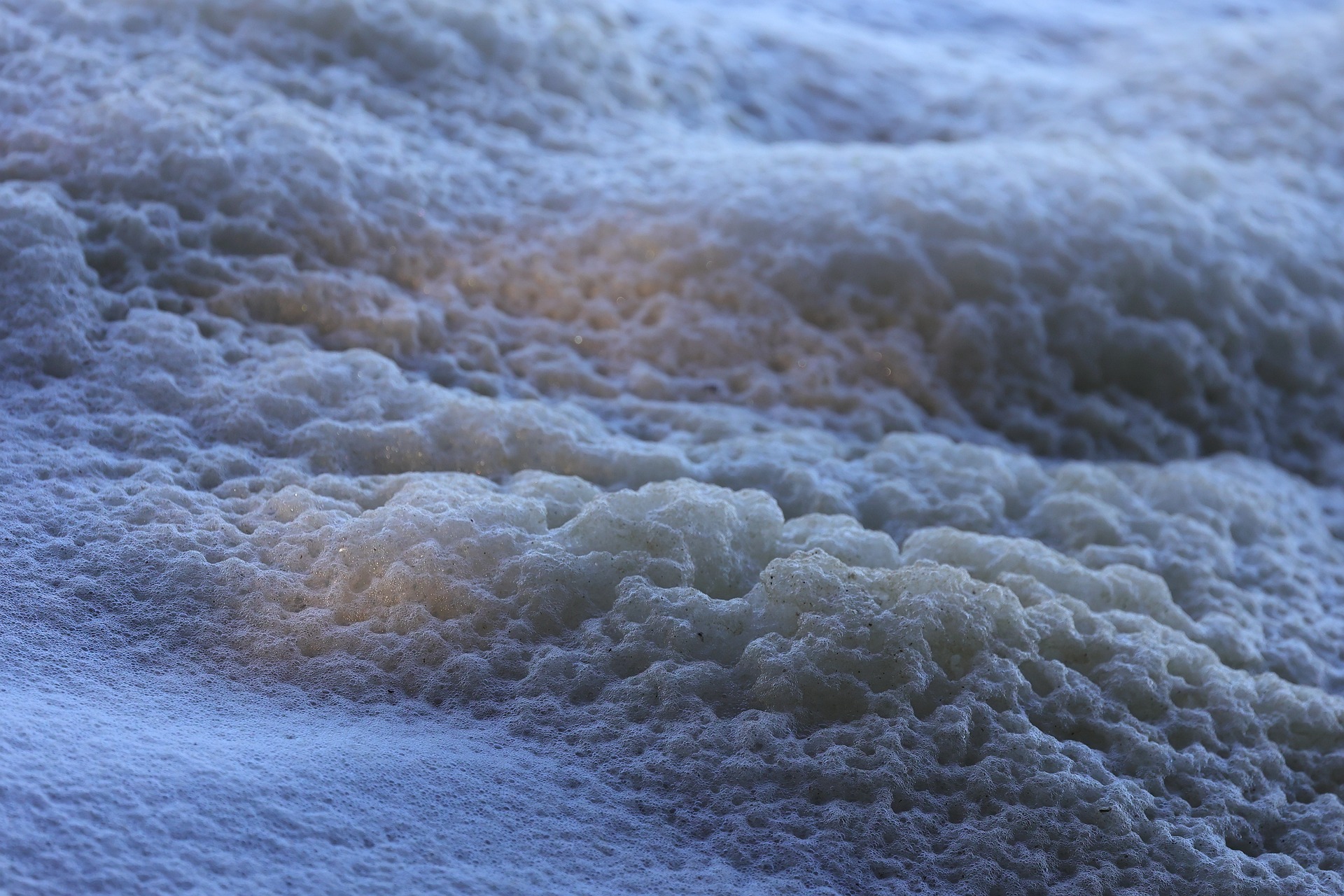
No trip to Galveston Island is complete without a stop at Murdochs Pier to peruse the rows and rows of sea shells and oceanic souvenirs or enjoy a drink out on the mid-deck, watching the rhythmic waves roll in below. I’d like to say that that’s something I could do for hours—watch the waves—but between my hyperactive children and my own limited attention span, moments to sit and admire are moments I must carefully steal away. I have to be careful though. No moment of wonder should be wasted. I have a deep need to give myself to them fully, to try my best to capture the sensations of those moments in my memory so viscerally that I can transport myself back in a moment of need, like filling the gas tank in a Minnesota February. My last visit was this past March. I remember looking at the ocean below, the waves churning, pulsing, at a much higher frequency than typical. Chaotic. The ocean is so chaotic. Powerful, and yet—the foam. The water crests and crashes, yes, but the foam, it dances. The seafoam, with its light, airy texture, glides and pirouettes across the surface of the water, occasionally being carried ashore by the breeze.
But what exactly is it?
Seafoam, at its core, is a testament to the ocean’s dynamic life cycle, beginning with the microscopic world of marine organisms, such as algae and plankton. These tiny creatures thrive in the nutrient-rich waters, forming the foundation of the ocean’s food web. When they die, their organic matter doesn’t simply vanish. Instead, it undergoes decomposition, releasing proteins, lipids, and other organic compounds into the seawater. These compounds are the building blocks of seafoam.
The mechanics here can be a tad tricky, but it ultimately comes down to the properties of the organic matter itself, especially when examining the lipids (fats, and oils). On a molecular level, many of them resemble a bit of a balloon on a string. One end, the balloon side, is hydrophilic—it loves water. The other end, the string, is hydrophobic—it repels water. This dual nature of the molecules at play causes a lot of strange interactions with their watery surroundings. They’re essentially set in motion until they’re able to latch together or from globs around dirt, particles, or even air bubbles, allowing their “heads” to all face outward and their “tails” to turn inward into what is now a larger bubble.
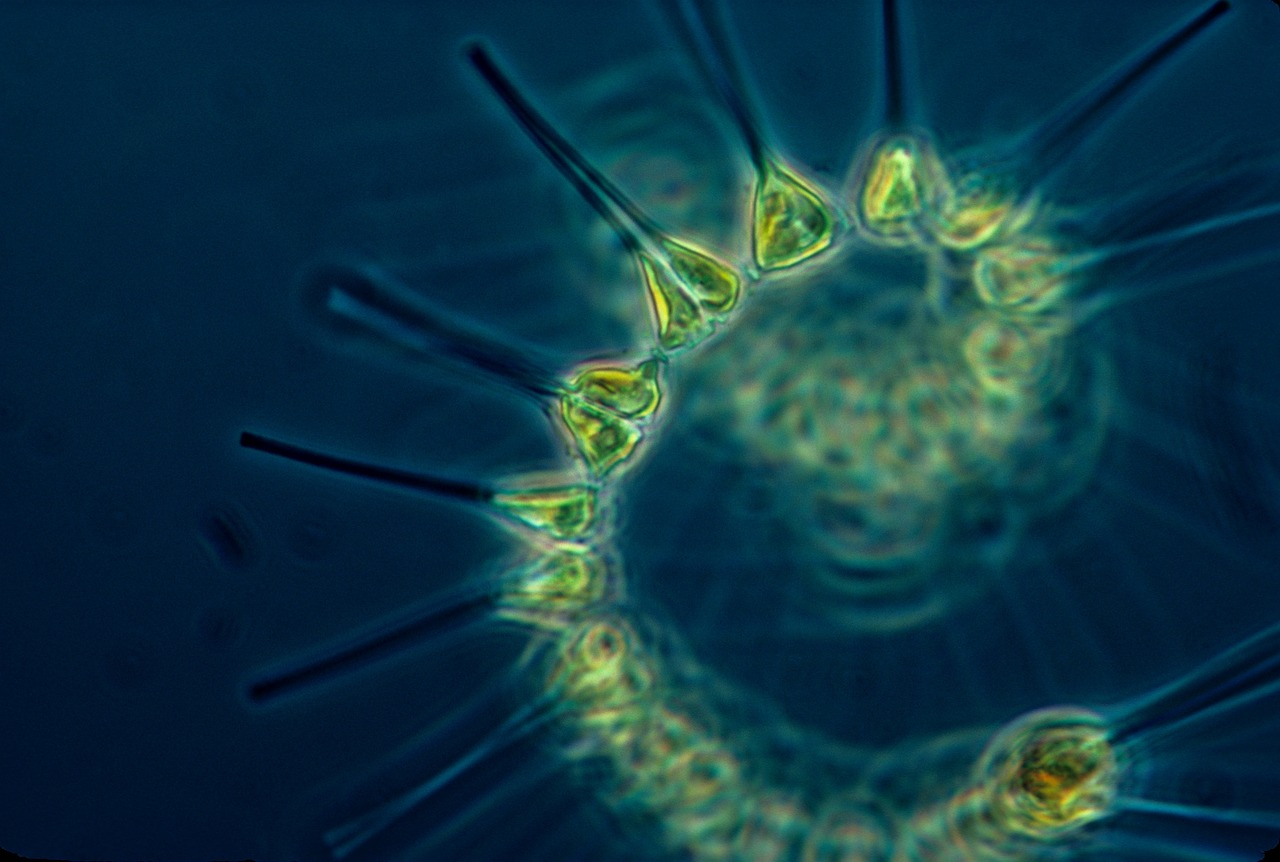
The wind also plays a crucial role. When the wind stirs the surface of the ocean, it creates turbulence. This turbulence causes the water to mix with the organic matter, trapping air in the process. The result is a frothy latte-like foam. This phenomenon can be likened to whipping cream; just as air is whipped into the cream to create a light, fluffy texture, the ocean’s waves whip air into the water laden with organic compounds, producing foam.
This process is not just a random act of nature but a crucial part of the ocean’s life cycle. The death and decomposition of marine organisms release nutrients back into the ecosystem, providing the essential building blocks for new life. A continuous cycle of life, death, and rebirth. The same forces that create the foam—air, water, and carbon-based molecules—are the very building blocks of life, part of a larger system that sustains life on Earth.
The very existence of the foam is fleeting, just like the life that preceded it. A mere moment. A moment I’m trying with all my might to fully embrace. Before I walk away, feeling a tug at my hand that says “I’m bored! Let’s go kick some sand!”, I close my eyes, take a deep inhalation of the salty breeze, feeling it and the light of the evening sun on my skin, and I can’t help but feel a profound sense of gratitude for the intricate and interconnected world we inhabit, where even the simplest phenomena—bubbles and their accumulations— are never so simple. My moment of quiet was fleeting, but so is everything in life. A morning cup of coffee, a moment of conflict with a coworker, a good book, a bad book, the restless tug of my child’s hand on mine, my time with them, their childhood, life itself. All fleeting moments. All more intricate or interconnected than we realize in the moment. I promise myself, to appreciate them all.
Support The Wild Life for as little as $1 per month

The Wild Life was created in January of 2017 by, me, Devon Bowker after finishing my degree in wildlife biology. It’s been amazing to see how things have changed over the past 7 years, both personally and here. I have tons of ideas and projects in the works and cannot wait to share them with you. Whether you’re a long-time follower or new to The Wild Life, thank you for being here.
Leave a Reply