
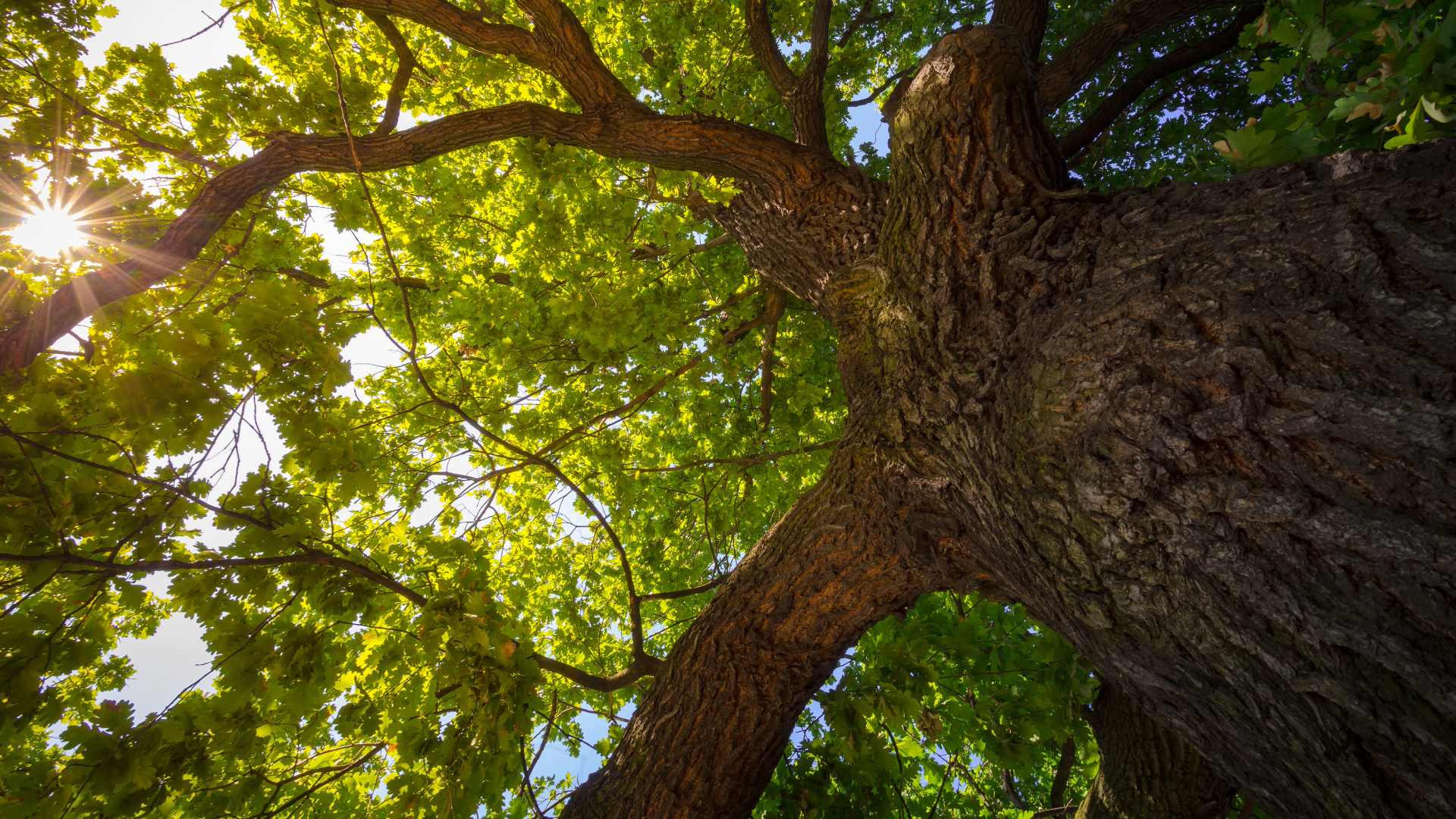
There once was a forest, and in it, the world was whole.
The trees stretched tall, as trees do, and their roots tangled deep, as roots must. The wind, which has been around much longer than anyone, liked this forest very much and would often stop to share stories with the leaves. The rivers, which have always been terrible gossips, listened closely as the leaves dropped like postcards between friends, and carried their stories far and wide, sharing them with the fish and the foxes and the ferns. And for a time, the world was very nearly perfect.
And then, humans, in all their wonder, wandered in.
Not all at once, and not all with bad intentions. Some were kind, deeply so. They walked lightly, spoke softly, and listened to the trees when they had something important to say. Others were different. They had hungry eyes and hands that never stopped taking. They were filled with a great and endless Wanting. They built their homes tall and their walls taller, and when they looked at the forests, they did not see trees. They saw timber. When they looked at the rivers, they did not see water. They saw a thing to be bought and bottled.
Still, some places were spared.
Vast stretches of land were set aside—not for taking, but for keeping. People traveled great distances to walk among towering pines, to watch the bison move like rivers over golden prairies, to hear the wolves sing under the stars. These lands belonged to no one, and so they belonged to everyone. They were a promise—a reminder that not everything in the world had to be eaten, paved, or sold.
But Wanting is a patient thing.
It whispered in the ears of men who built towers with their names on them, who measured success not in kindness or wisdom but in the weight of gold. “Why should this land be wasted?” it said. “Why should the people have something that I do not?” And so, one by one, the wild places vanished. The pines were felled. The bison were fenced. The wolves were silenced. The burrows and budding things were paved over, forever cutoff from the rain, the sun, and birdsong.
Until, at last, there was only one tree left.
It was not the tallest, nor the oldest, nor the grandest. But it was the last, and that made it special. And in its branches, where the wind still stopped to rest, lived a girl named Wren.
Wren had leaves in her hair and dirt on her hands and bare feet that knew the mossy bark of the tree like an old friend. She had spent her whole life listening—to the wind, to the roots, to the quiet hum of things too old to have words. And that is how she knew, long before she saw him, that a man was coming.
His arrival was heralded by an awful din.
First, the grinding of wheels too heavy for the cracked and aching road. Then, the blaring of brass horns—though there was no one around to hear them but the crows, who cawed in protest. A golden carriage—too large, too gaudy, too pleased with itself—rolled to a stop at the base of the tree. It was emblazoned with a name that did not belong to the land, but to the man who had claimed it.
He stepped out with a grin like a billboard—too wide, too white, too polished. His hair, like spoiled straw, sat atop his head like a thing he had placed there in haste and promptly forgotten about. He adjusted his crisp collar and shining cuffs, straightened his gleaming tie, and held out his arms as though waiting for applause.
None came.
He cleared his throat.
“Beautiful day,” he announced, though the sky had been choked with smog since the last factory came. “I mean, really tremendous. Best day. People are saying it’s the best day they’ve ever seen.”
Wren tilted her head.
“No one is saying that,” she said.
He faltered, but only for a moment.
“I am here,” he declared, “on behalf of the Very Great and Tremendously Important Company of More!”. He spoke with his hands as if his words were a physical thing before him, a dough he could pull and stretch to inflate their importance and truth.
“The Company of More?” Wren echoed. “More what?”
“More everything!” The man beamed. “More buildings, more business, more wealth!”
Wren, puzzled by the man’s confidence in his truth, squinted her eyes.
“And what will there be less of?”
The man’s billboard grin turned sour, not so enthused with the challenge. He let out an impatient breath and tilted his head back ever so slightly as to look at her down the bridge of his nose.
“Progress means that some things will need to be adjusted”
He reached into his pocket and pulled out a crisp, green bill, perfectly pressed and graced with the face of a long-dead man who had once, perhaps, believed in something other than money.
“This,” he said proudly, “is worth more than a thousand trees. Anyone other than a fool knows that.” His mouth formed a grin made empty by the darkness in his eyes.
Wren took it between her fingers, held it up to the light. It did not glow green like the leaves in spring. It did not whisper secrets. It did not smell like pine or rain or earth.
She frowned. “But can it grow?”
The man’s too-white teeth flashed again, though the edges of his mouth twitched. “Grow?”
“Yes,” she said. “If I plant it, will it sprout? Will it bear fruit? Will it send roots down deep and branches up high? Will it shelter foxes and shade ferns and give the wind a place to rest?”
The man chuckled the way people do when they don’t understand a joke but want to pretend they do. “Little girl, that’s not how money works.”
Wren nodded. “Ah. I see.”
She folded the bill neatly, set it on the ground, and stamped it into the soil.
Nothing happened. No tree burst forth. No roots wound their way into the earth. The ground did not sigh in relief.
“That is very rude,” the man huffed.
“No,” Wren said. “What’s rude is thinking you can eat paper and drink ink and breathe metal.”
She placed her hands against the bark of the Last Tree. And the tree, having waited a very long time for this moment, finally spoke. Not in words, because trees are too old for something as small as words, but in the rustling of leaves and the trembling of roots and the hush of something ancient waking up.
The wind heard it first. Then the ground. Then the river, which had been waiting so patiently for someone to remember its name.
And so, it was only but a matter of time before the message was heard by all.
From all corners of the city, from the cracks in the pavement, from the places the Company of More had tried to forget, people came. Some walked. Some ran. Some arrived on feet bare and calloused, while others stepped down from their own golden carriages, pockets lined with those same crisp green bills—but their hearts, it seemed, now filled with something different.
Not a Wanting, no.
A Remembering.
The man from the Company of More took a step back.
No, not a step. A stumble.
The man from the Company of More took a step back. No, not a step. A stumble.
He reached into his pockets, fingers grasping for crisp green bills as if they were lifelines, as if they held the weight they once did. He held one up, expecting eyes to widen, hands to reach, voices to hush in reverence.
But the people did not stop—did not care to.
And the man, the man who had spent his life buying and building and claiming, felt something he had never known before.
Irrelevance.
His words, once sharp as steel, dulled in the air. His papers, once thick with contracts and signatures, fluttered uselessly to the ground. His name, once stamped on buildings and streets and deeds, was carried away by the wind, scattering like dust.
He opened his mouth—perhaps to demand, perhaps to beg—but the people were no longer listening to his venomous propoganda of progress and capital.
Some brought shovels, not to dig foundations for towers but to carve space for roots. Others carried seeds wrapped in scraps of cloth, pockets brimming with the promise of another, more valuable green. Some held nothing at all, save for the memories of rivers that had once run clear and fields that had once stretched wide, memories they would see restored.
They tended to the tree, to the soil, to each other. They built not walls, but open spaces. They measured success not in wealth, but in the return of birdsong. They passed stories down like seeds, knowing that, one day, the forests would return.
The man watched.
And then, with no towers left to stand on, no walls left to hide behind, he turned.
And he walked away.
Not forward, not toward something new, but back the way he had come—toward the cold, empty halls of More, where Wanting sat waiting with open arms.
And in the branches of the Last Tree—no, not the last, not anymore—Wren listened. To the wind. To the roots. To the quiet hum of things too old to have words.
And for the first time in a long, long while, the world was very nearly perfect.
You Can Support The Wild Life for as little as $1 per month
Support The Wild Life for as little as $1 per month

I started The Wild Life in January 2017 after finishing my degree in wildlife biology, and it’s incredible to see how much has evolved over the past seven years—both in my own journey and in this project. There are so many exciting ideas and projects in the works, and I can’t wait to share them with you. Whether you’ve been here from the start or just discovered The Wild Life, thank you for being part of this adventure.
Leave a Reply