
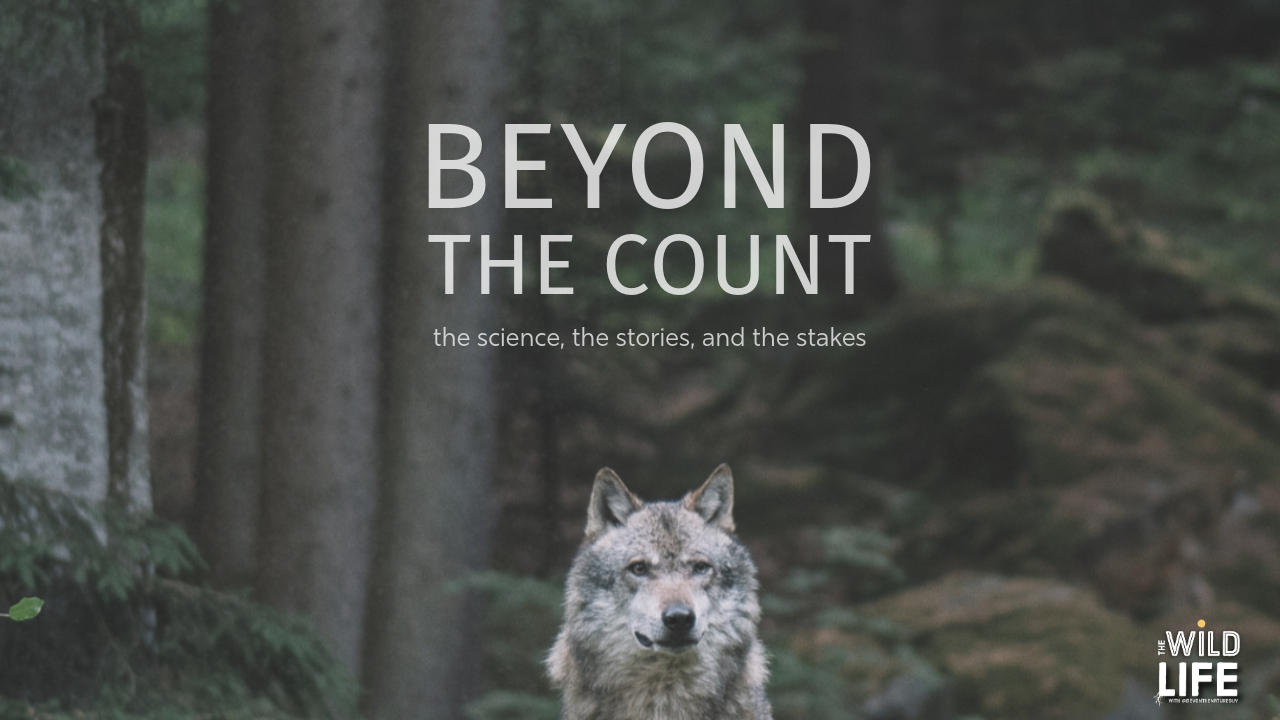
When I was younger, I was captivated by wolves. I devoured books about them (WOLVES by Seymour Simon was a favorite), pored over field guides and fact sheets, and dreamed of a future where I could stand in the wild and hear their howls cut through the cold evening air.
Years later, I found myself working in wolf conservation, reviewing the very numbers that dictate their future—population estimates, conflict reports, mortality data. My pathway there was one I never could have anticipated; neither was my experience. It’s a period of my life that I refer to as “when I met the Wizard (of Oz”, but that’s a topic for another time. In my position, I was tasked with investigating our states methodology for estimating our wolf population, and what the data could and couldn’t tell us.
Now, wolves in Minnesota—and across the US—once again face losing their federal protections. The argument often boils down to numbers—whether we have “enough” wolves to consider them recovered.
But what does “enough” actually mean? Enough for what? For whom? And how do we know?
The Questions We Need to Ask
This series (yes, a series) isn’t about being pro-wolf or anti-hunting. It’s not about pushing an agenda—it’s about asking the right questions. Because the way we talk about wolves, the way we count them, and the way we make decisions about their future are all based on a lot of assumptions—and myths—that deserve scrutiny. Over the coming weeks, we’ll explore:
• The role of wolves in Minnesota’s ecosystems—how they shape everything from deer behavior, moose conservation, beaver populations, to plant life.
• The reality of conflicts with livestock and pets—how often they happen, how they’re handled, and why fear often outweighs facts.
• The effectiveness of nonlethal conflict prevention—what’s working, what’s not, and how we can fund solutions that benefit both wolves and farmers.
• The impact of hunting and lethal management—not just in numbers, but in pack stability, long-term recovery, and even the risk of increased conflicts.
• What ‘recovery’ really means—is it just about a number, or does it require genetic diversity, connected habitat, and a stable ecological role?
• Why legal protections matter—and what their loss could mean beyond just wolf populations.
More Than Just a Policy Debate
This isn’t just a scientific discussion; it’s a deeply reflective one. Wolves exist at the intersection of ecology, history, culture, and policy. They are symbols, scapegoats, keystones, and adversaries—all depending on who you ask. My goal isn’t to tell you what to think, but to provide the context and evidence that lets you think critically about the decisions being made.
I hope you’ll come along for this journey—whether you’re here to learn, to challenge, or to contribute. Wolves are more than a number. And so is their future.
Let’s explore it together.
You Can Support The Wild Life for as little as $1 per month
Support The Wild Life for as little as $1 per month

I started The Wild Life in January 2017 after finishing my degree in wildlife biology, and it’s incredible to see how much has evolved over the past seven years—both in my own journey and in this project. There are so many exciting ideas and projects in the works, and I can’t wait to share them with you. Whether you’ve been here from the start or just discovered The Wild Life, thank you for being part of this adventure.
Leave a Reply